
Custom joinery Dubai: built in our Jebel Ali workshop
October 20, 2026 · 8 min read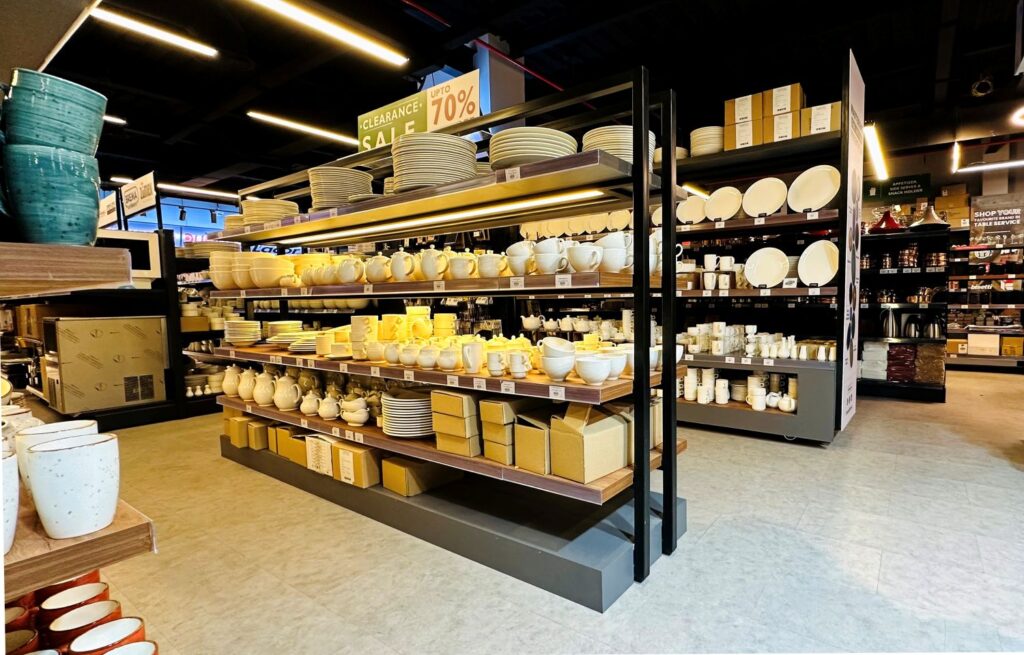
Custom joinery in Dubai means fitted furniture made to your exact measurements, drawn as shop drawings, then built and installed by one team. Crafty Clare decoration design LLC cuts and finishes every piece in our own joinery workshop in Jebel Ali, so the wardrobe or kitchen you approve is the one that goes in.
Why work with Crafty Clare decoration design LLC
- Own joinery workshop in Jebel Ali, Dubai
- Turnkey interiors from design to finishing under one contract
- In-house design team and workshop production crew
- Made to measure joinery built and finished under one roof
- Google rating of 4.5 from 2 customer reviews
- One point of contact from first survey to handover
When design, production and installation sit with one company, nobody can point at another party when a 20 mm gap appears at handover.
What custom joinery covers
Custom joinery covers any fixed or fitted element built to your measurements instead of bought from a catalogue. In Dubai homes and commercial units that usually means kitchens, wardrobes, wall panelling, reception desks and retail displays.
- Kitchens: base and wall runs, islands, pantry pull outs, appliance housings.
- Wardrobes and walk in closets: hinged or sliding doors, drawer banks, shoe trays, mirror fronts.
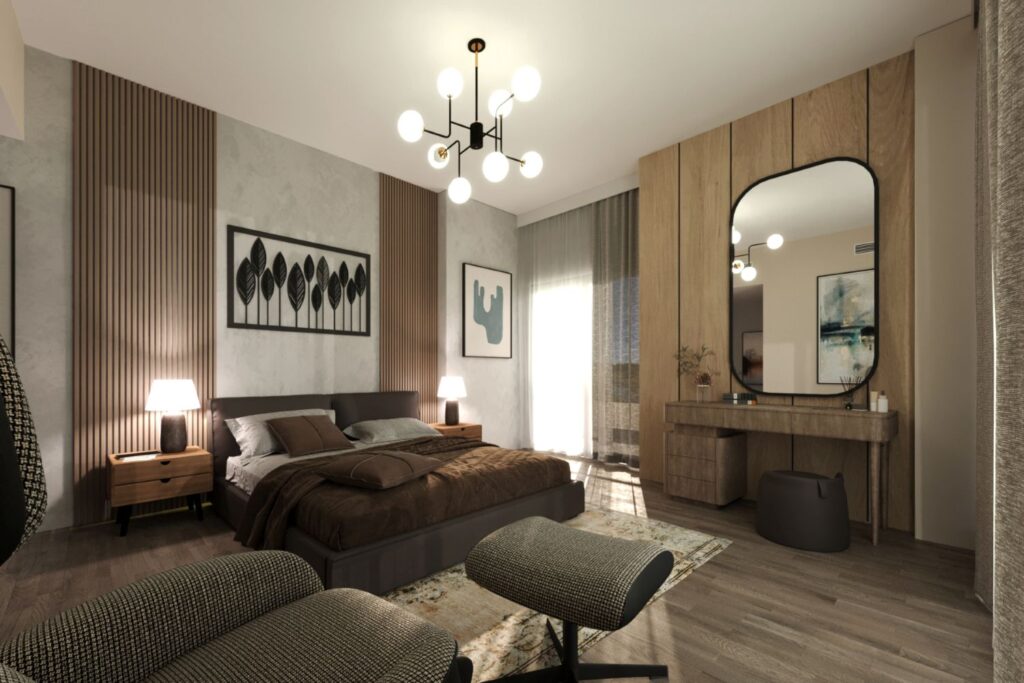
- Media walls and panelling: fluted MDF, veneer panels, floating shelves, hidden LED channels.
- Reception desks: curved work, cable management, stone or solid surface tops.
- Retail displays: plinths, display walls, cash counters, shelving.
- Doors, frames, under stair storage, laundry cabinetry.
On a full turnkey interior fit-out in Dubai, the joinery is drawn alongside the electrical, HVAC and finishing drawings. That single set stops the classic problem of a socket ending up behind a wardrobe back panel.
Workshop built or site built: why tolerance and humidity control matter
Joinery made in a workshop is cut on calibrated machinery in a controlled room, which is why doors and drawers line up within a millimetre. Site built work is cut in dust, heat and uneven light, and the gaps show at handover.
Dubai sits at 60 to 90 percent relative humidity for much of the year. MDF and ply absorb moisture, expand when cut, then shrink once air conditioning dries the room. A panel cut on site at 80 percent humidity can lift its edge banding or bow a door within weeks. In our Jebel Ali workshop boards are acclimatised for at least 48 hours, cut under extraction, edge banded the same day and sprayed in a booth.
- Panel saw and edge bander cuts, so every carcass is square.
- A spray booth, so lacquer dries without dust nibs.
- Dry storage, so finished doors are not stacked against a wet wall.
- A short trip from Jebel Ali to site, so a replacement shelf arrives in days.
I had a wonderful experience working with Crafty Clare Decoration Design. From our initial consultation to the final reveal, the team was professional, creative and attentive to every detail. Majitha Sonu, 5 out of 5 stars
Materials that survive Dubai
For anything load bearing or fixed to a wall, use marine ply or moisture resistant MDF for the carcass and seal every cut edge. Solid timber is fine for frames and feature details, but long runs will move in an air conditioned room.
- Carcass: 18 mm marine ply or moisture resistant MDF.
- Kitchens and wet areas: marine ply or PVC foam board, sealed on all faces.
- Fronts: 18 mm MDF for spray lacquer, veneered ply where you want real grain.
- Edge banding: 2 mm ABS, not 0.4 mm paper.
- Hardware: soft close runners rated for the load, hinges with spares you can buy later.
Veneer is real timber and is book matched across doors. Laminate is a printed layer that costs less, wears evenly and suits rental units and busy retail counters. Veneer needs a protective topcoat and will fade in direct afternoon sun, so see both samples in daylight before deciding.
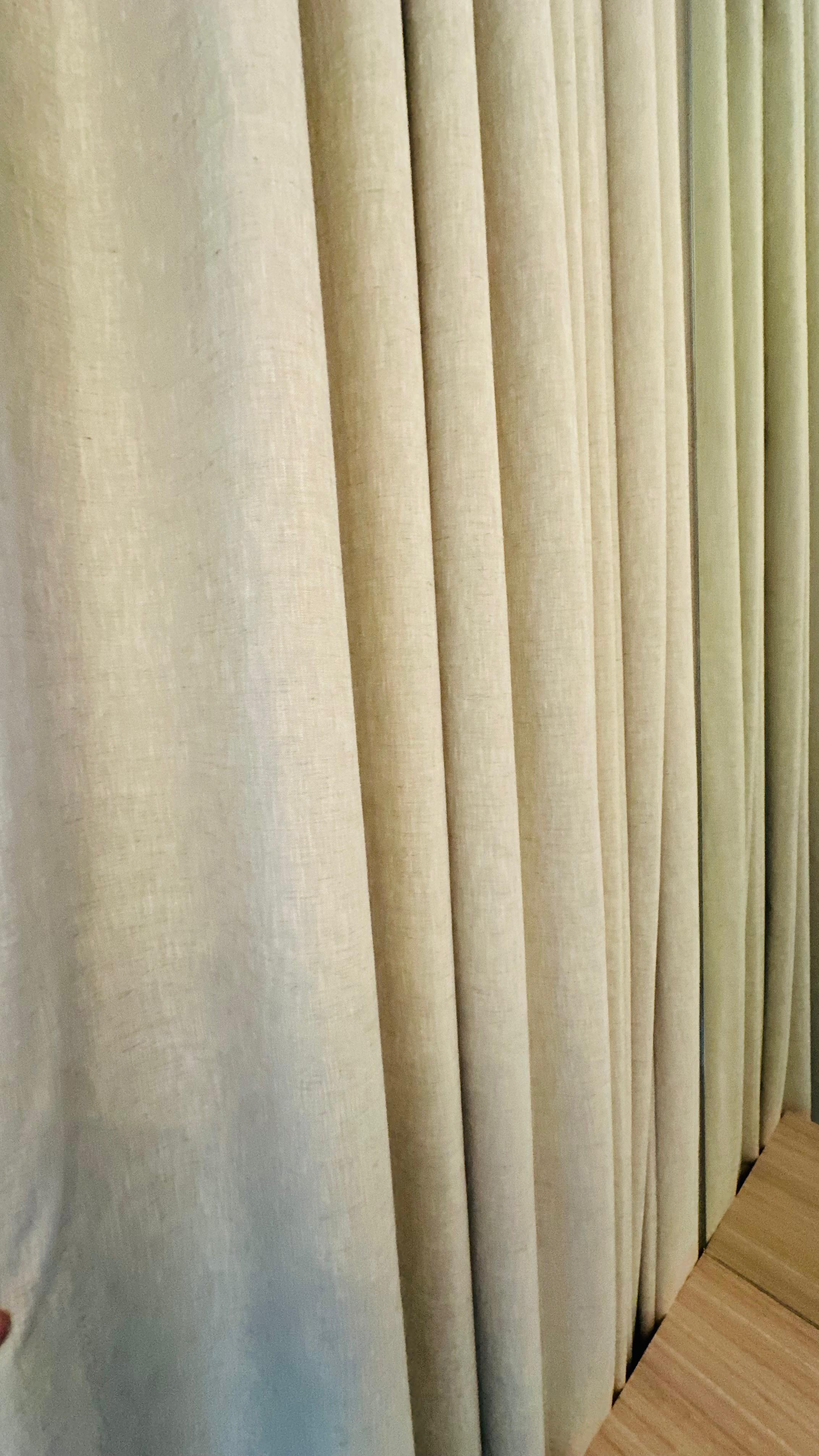
 Coffered ceiling detail and full height curtains in a contemporary Dubai living room.
Custom joinery cost in Dubai: real AED bands
Custom joinery in Dubai generally runs from AED 1,100 to 2,400 per linear metre for a melamine kitchen run, and AED 2,600 to 4,200 per linear metre for a veneer or lacquered wardrobe. These are supply and install bands, not teaser starting prices.
| Item | Typical AED band | What moves the number |
|---|---|---|
| Wardrobe, melamine | 1,400 to 2,200 per linear metre | depth, internals, sliding or hinged |
| Wardrobe, veneer or lacquer | 2,600 to 4,200 per linear metre | veneer species, spray finish, hardware |
| Kitchen base and wall run | 1,100 to 2,400 per linear metre | carcass, drawers, worktop |
| Wall panelling | 350 to 900 per sqm | substrate, veneer, acoustic backing |
| Internal door and frame | 1,200 to 3,500 per door | core, veneer, ironmongery |
| Reception desk | 4,000 to 12,000 per unit | size, curves, cable management |
A 4.2 linear metre walk in wardrobe in Jebel Ali with a marine ply carcass, veneer fronts, two drawer banks, a shoe tower and LED shelf lighting lands between AED 9,500 and 14,000. The spread comes from the veneer species, hinged or sliding doors and the hardware brand.
Curves and radius work, book matched veneer, hand sprayed two pack lacquer, imported runners, ceilings above 2.7 m, no lift access and out of hours working in a mall all push the number up. For retail and F&B, our joinery and fit-out portfolio shows why commercial joinery in Dubai is priced per unit, since every counter is a one off.
Design to installation: the 4 to 8 week timeline
A typical custom joinery job runs 4 to 8 weeks from signed shop drawings to handover. A single wardrobe sits at the short end, a kitchen with stone tops and an approved mock up at the long end.
- Survey and brief, day 1 to 3. Laser measure, wall plumb, floor level, sockets, ceiling height.
- Design and samples, week 1 to 2. Layouts, 3D views, physical boards and finishes.
- Quotation, week 2. Itemised per linear metre or per unit, with hardware named.
- Shop drawings, week 2 to 3. Every panel dimensioned, edge banding and tolerance notes included. You sign these.
- Mock up and material order, week 3 to 4. Boards acclimatised, sample door approved on larger jobs.
- Production, week 4 to 6. Cutting, edge banding, assembly, spraying, quality check.
- Installation, week 6 to 8. Two to four days for a wardrobe, two to three weeks for a kitchen with stone.
- Snagging and handover. Doors adjusted, drawers aligned, touch up kit handed over.
If the joinery is fixed and forms part of a fit out that alters the unit, it needs a fit out permit before installation. In Jebel Ali Free Zone that runs through Trakhees, elsewhere in Dubai through Dubai Municipality, with the trade licence held under DET. Ask for the permit number before the install date, not after.
 Dining and staircase joinery in an open plan interior, finished to the same drawing set.
Really happy with their works, good designs, friendly team and great services LAKSHMI KC, 4 out of 5 stars
Spec mistakes that cost money at handover
Most joinery disputes in Dubai start with drawings, not with the workshop. These are the ones we see most.
- No signed shop drawings, so the built wardrobe follows the 3D picture and not the site.
- 0.4 mm paper edge banding on a kitchen that sees steam and daily wiping.
- Standard MDF specified for a vanity or a balcony unit.
- Joinery drawn before electrical first fix, so sockets land inside a carcass.
- Lift and door widths ignored until a 3.2 m one piece wardrobe will not go up.
- Wall plumb and corner angles never measured, so filler panels become a variation.
- Lacquer colour approved from a phone photo instead of a sample in daylight.
To request a joinery quote, send a sketch, a photo of the space and your rough budget. We will tell you what is realistic in that AED band before you pay for drawings. WhatsApp 0508570938 works too.
Frequently asked questions
How much does custom joinery cost in Dubai?
Most projects fall between AED 1,100 and 2,400 per linear metre for melamine work, and AED 2,600 to 4,200 per linear metre for veneer or lacquer. A 4.2 linear metre walk in wardrobe with veneer fronts and LED lighting usually lands at AED 9,500 to 14,000, and wall panelling runs AED 350 to 900 per sqm.
How long does custom joinery take from design to installation?
Plan for 4 to 8 weeks from signed shop drawings. A single wardrobe is closer to 3 or 4 weeks, while a kitchen with stone tops and a mock up takes 6 to 8 weeks. Add 1 to 2 weeks for design and approval at the front, so start about two months before you want the room finished.
Do I need a permit for built in joinery in Dubai?
If the joinery is fixed and part of a fit out that changes the unit, yes. Permits come from Trakhees in Jebel Ali Free Zone and from Dubai Municipality elsewhere, with the trade licence held under DET. Confirm who is applying before you sign the joinery order, because approval drawings can change panel sizes.
Is marine ply better than MDF for wardrobes in Dubai?
Marine ply handles humidity better, holds screws at the edges and survives a slow leak. Moisture resistant MDF gives a smoother painted finish and cleaner machined edges. Most of our wardrobes use a marine ply carcass with MDF or veneered fronts.
Can you match new joinery to an existing kitchen or wardrobe?
Usually yes, if we can see a physical sample. We match veneer by species and cut, and lacquer to a RAL or scanned sample. Expect slight variation between batches, which is why we make a door sample first on larger jobs.
Do you build on site or in the workshop?
Everything that can be built in the workshop is built there and delivered to site in sections. Site work is limited to fitting, scribing to walls and final adjustment, which keeps dust and noise down in an occupied home or building.
Planning a project in Dubai?
Tell us about your space and we'll come back with a plan and a price.
Get A QuoteWhatsApp Us