
Salon interior design Dubai: fit-out cost and guide
October 13, 2026 · 7 min read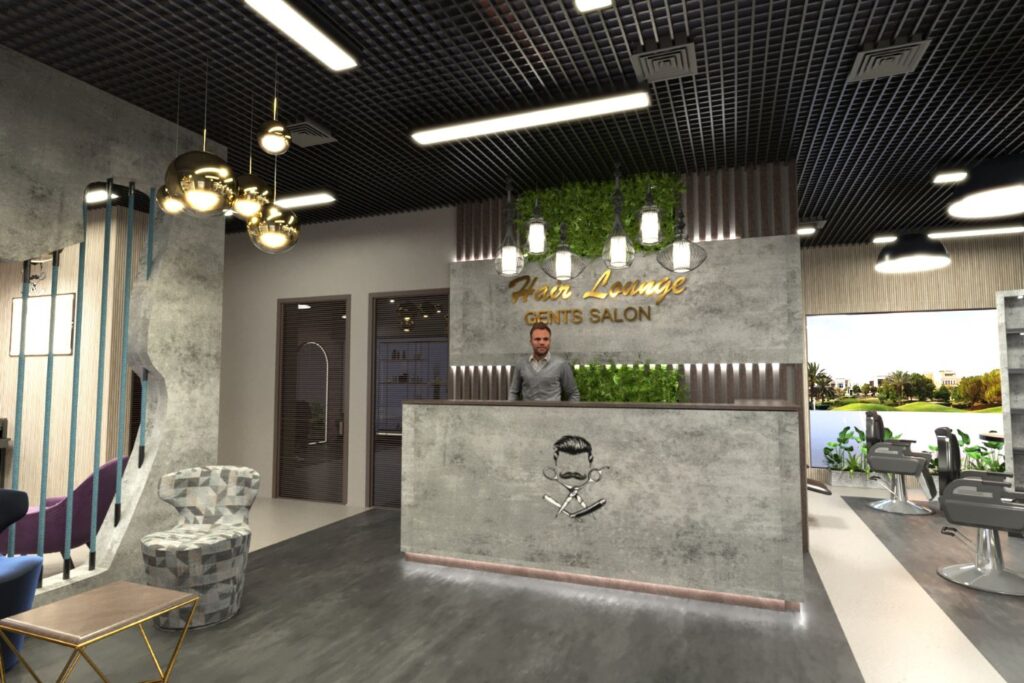
Salon interior design in Dubai is a commercial exercise: the plan has to move more clients per hour, sell retail at the pay point and keep wet and dry services apart. This guide covers layout, joinery, approvals and real AED costs for salon and spa interiors, written from our joinery workshop in Jebel Ali.
Why work with Crafty Clare decoration design LLC
- In-house joinery workshop in Jebel Ali
- Turnkey design and build under one contract, no subcontractor chain
- Itemised fixed-price quotation split by joinery, MEP and finishes
- Salon, spa and hospitality fit-out specialism
- Designers and joiners employed directly, not outsourced
- One point of contact from concept drawing to handover
What salon interior design must deliver commercially
A salon interior has to cover the rent, so it is a planning problem before it is a styling problem. Three numbers decide whether it works.
Station throughput
A Dubai styling station turns around 8 to 10 clients in a 10 hour day when the backwash is a few steps away. Move the wash units to the far corner and you add 40 to 60 seconds of walking per client, which is one lost booking per chair per day at an average ticket of AED 120.
Retail display
Put the retail wall at the pay point, not in a corner. Allow 1.2 metres of shelf width for a 6 station salon, light it at 3000K to 3500K so product colour reads true, and place it so every client passes it twice, once on entry and once at payment.
Client journey
Sequence the plan as entry, waiting, consultation, backwash, styling, payment, exit. Hair and nail stations should not share an air path. Our salon and hospitality interior projects show the same logic in completed units.
Salon layout and styling station planning
Plan the wet trades first, then the mirrors, then the chairs. Plumbing is the one element you cannot move cheaply after handover.
Mirrors and station spacing
Allow 1.2 metres to 1.5 metres of wall per station, with a mirror 900mm wide and its bottom edge 1.1 metres off the floor. Keep 900mm clear behind the chair for the stylist, and never plan a mirror run in 600mm modules, because stations come in even numbers and mirrors do not.
Backwash and plumbing positions
Each backwash needs a 50mm or 110mm waste at a 1 in 50 fall, 15mm hot and cold supply, a floor drain and a trap you can reach without cutting the cabinet. Group wash units along one wall. Before signing a lease in Jebel Ali, check where the floor drain and stack sit, because a wash position four metres from the stack can add AED 8,000 to AED 15,000 in core drilling and re-routing.
Storage and services
Plan a colour bar within 1.5 metres of every station, trolley parking at each chair, and four socket outlets per station.
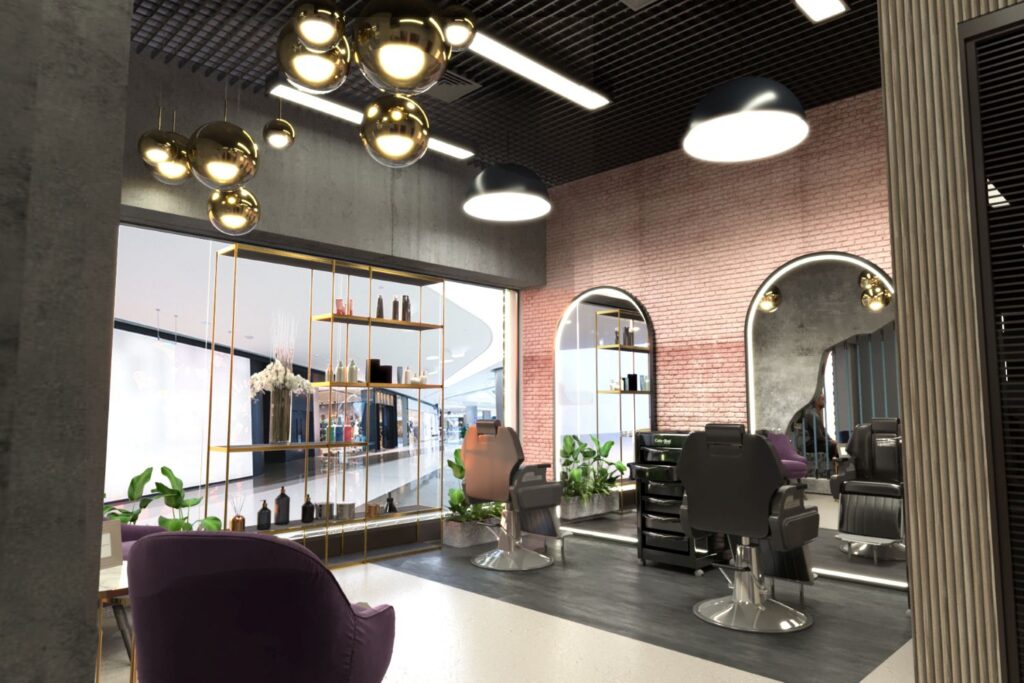 The joinery team that builds this millwork in Jebel Ali builds salon stations, reception desks and retail walls the same way.
Joinery that survives salon chemistry
Custom joinery outlasts imported flat-pack in a salon because you control the core, the edge and the seal, not just the colour. Hair and nail work throws peroxide, colour, acetone and thioglycolate at every surface within reach.
- Compact laminate or HPL faces on station, reception and retail fronts, not paper-faced melamine
- 18mm moisture resistant carcasses with sealed cut edges
- Stainless steel or aluminium edging on wet units and wash surrounds
- Aluminium plinths and skirting so a mop does not swell them
- Sealed silicone at wall junctions instead of grout
- Two pack polyurethane on timber show surfaces
Imported modular furniture is built to a fixed module. A 4.5 metre mirror run, a 110mm waste position and a reception desk that turns a corner rarely match a catalogue. Custom joinery is cut from the site survey in our Jebel Ali workshop, so the unit reads as one interior. The full scope sits on our interior design and fit out services page.
Approvals for a salon fit out in Dubai
You need a valid DET trade licence for the salon activity first, then a fit-out permit, and the authority depends on the unit. Mainland units go through Dubai Municipality. Units inside the Jebel Ali free zone go through Trakhees.
- Confirm the DET licence activity, gents salon, ladies salon or spa, and the tenancy contract in the salon trade name.
- Appoint a licensed fit-out contractor and submit layout, ceiling, MEP and joinery drawings.
- Apply for the fit-out permit with the ventilation and drainage design attached.
- Get the ventilation design approved for hair and nail stations.
- Book staged inspections as MEP, ceilings and finishes close up.
- Collect the completion certificate, then pass the final DET inspection before opening.
Nail stations need local exhaust at the table, not just a ceiling diffuser. Aim for 10 to 15 air changes per hour in the main salon and keep dryer zones on separate extract. Allow a 50mm waste per basin and a grease trap for any spa or body treatment room.
What a salon fit out costs in Dubai
A 90 sqm gents salon in Jebel Ali with 6 stations, 1 backwash, a reception and a retail wall lands between AED 260,000 and AED 420,000 including permits and a 5 percent contingency.
| Scope | Share of budget | Typical AED |
|---|---|---|
| Joinery and millwork | 35 to 38% | 95,000 to 155,000 |
| MEP, plumbing, drainage, ventilation | 22 to 24% | 60,000 to 95,000 |
| Finishes, ceilings, floors, lighting | 20 to 22% | 55,000 to 95,000 |
| Mirrors, glass, sanitaryware, wash units | 8 to 10% | 25,000 to 45,000 |
| Permits, drawings, authority fees | 5 to 7% | 15,000 to 30,000 |
| Total | 100% | 260,000 to 420,000 |
Design only fees for the same unit run AED 12,000 to AED 25,000, or roughly 8 to 12 percent of fit-out value if the designer stays on site through handover.
Two lines operators underestimate. A second backwash adds AED 18,000 to AED 30,000 once plumbing, joinery and drainage are counted. A wet spa room adds AED 45,000 to AED 90,000, mostly waterproofing, drainage and ventilation.
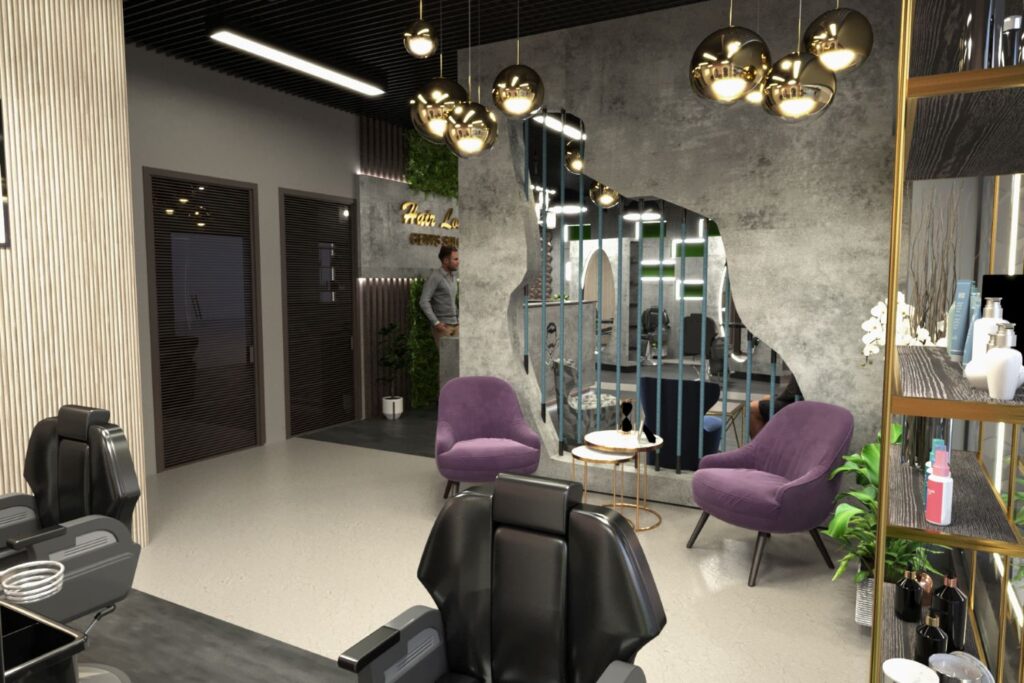 Gold detailing, paneling and reflective finishes show the decorative joinery standard our workshop delivers.
How long a salon fit out takes in Dubai
Design to handover runs 6 to 10 weeks for a straightforward salon, and around 12 weeks if the unit needs new drainage or a ventilation riser.
- Week 1 to 2: site survey, layout options, joinery drawings and a fixed price.
- Week 2 to 3: permit submission and authority comments.
- Week 3 to 4: strip out and MEP first fix while joinery is cut in the Jebel Ali workshop.
- Week 4 to 7: ceilings, walls, floors, ventilation and drainage connections.
- Week 7 to 9: joinery installation, mirrors, lighting, sanitaryware and signage.
- Week 9 to 10: snagging, cleaning, inspections and handover.
To walk the workshop and see the machinery, samples and live jobs before you commit, book a salon fit-out consultation and we will set a time in Jebel Ali. Operators planning a second site usually start with our more commercial interior guides.
Frequently asked questions
How much does salon interior design cost in Dubai?
Design fees for a 90 sqm salon usually run AED 12,000 to AED 25,000. When design and build are bundled, the design is absorbed into a fit-out of AED 260,000 to AED 420,000 for 6 stations, 1 backwash, reception and a retail wall.
How long does a salon fit out take in Dubai?
Six to ten weeks from design sign off to handover on a standard unit, longer if drainage or ventilation has to be re-routed. Joinery is fabricated in parallel in our Jebel Ali workshop, so it does not extend the programme.
Do I need a permit to fit out a salon in Dubai?
Yes. You need a valid DET trade licence for the activity and a fit-out permit, issued by Dubai Municipality for mainland units or Trakhees for units inside the Jebel Ali free zone. Ventilation and drainage designs are approved separately, and opening depends on the completion certificate.
What joinery is best for salons?
Compact laminate or HPL faces over moisture resistant carcasses, with stainless or aluminium edging on wet units and aluminium plinths. Paper-faced melamine and MDF plinths fail within a year under colour, peroxide and daily mopping.
Can you refit a salon while it stays open?
Usually yes, if the work is phased and the wet trades are grouped. Night shifts on joinery while half the salon keeps trading adds around 15 to 25 percent to labour cost, but it protects six weeks of revenue.
Planning a project in Dubai?
Tell us about your space and we'll come back with a plan and a price.
Get A QuoteWhatsApp Us